




Texas Instruments PCM186x Audio ADCs with Universal Front End
Texas Instruments PCM186x Audio ADCs with Universal Front End help designers integrate European Ecodesign in high-performance end products. By eliminating the need for a 5V supply or an external programmable-gain amplifier, PCM186x Audio ADCs enable designers to develop smaller, smarter products. The PCM186x family's highly flexible front end supports input levels from small-mV microphone inputs to 2.1VRMS line inputs without external resistor dividers. Using a single 3.3V power supply, PCM186x integrates many system-level functions that assist or replace some DSP functions. An integrated bandgap voltage reference provides excellent PSRR, so that a dedicated analog 3.3V rail may not be required. Available in 2- and 4-channel versions, these 110dB audio ADCs from Texas Instruments are ideal for home theater and TV, BLUETOOTH® speakers, and microphone array processors.
Features
- Universal analog mic input, 2.1VRMS full scale
- 8 analog inputs with MUX and PGA
- Analog pre-mix function before PGA/MUX
- Single-ended, Pseudo-differential or differential inputs with mic bias
- 4x digital microphone inputs
- Up to 4 mono ADC channels (PCM1865)
- Hardware control (PCM1861)
- I2C or SPI control (PCM1863/5)
- H/W programmable gain amplifier
- Fixed mic pre-gain select: 20dB, 32dB (analog)
- S/W programmable gain amplifier
- Integrated high-performance audio PLL
- Single 3.3V supply for analog and digital
- Additional 1.8V core and interface for lower power consumption
- Power dissipation at 3.3V: <85mW (PCM1861/3), <145mW (PCM1865)
- 'EnergySense' audio content detector - for auto system wakeup and sleep
- Master or slave audio interface:
- Mixer functionality:
- Digital mixer to mix ADC outputs and I2S synchronous inputs
- Zero crossing PGA gain changes
- Automatic PGA clipping suppression control
Applications
- Home theater and TV
- Automotive head units
- Bluetooth speakers
- Microphone array processors
Additional Resources
Functional Block Diagram

Simplified Diagram

Related Development Tools

Texas Instruments AUDK2G Audio Daughter Card
Designed to work in conjunction with the K2G General Purpose EVM (EVMK2G) and the EVMK2G.
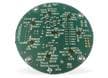
Texas Instruments PCM1864CMBEVM Circular Microphone Board (CMB)
Low-cost easy-to-use reference design for applications that require clear-spoken audio.

Texas Instruments PCM186xEVM Evaluation Modules
Easy-to-use boards for a full evaluation of 4-channel PCM186x Analog-to-Digital Converters (ADCs).
Publicado: 2014-08-28
| Actualizado: 2022-03-11